0.75 mm vs 1.0 mm vs 1.5 mm PVC Pool Liner Thickness Guide
Convert 0.75, 1.0, and 1.5 mm to mil, then compare PVC pool liner thickness without confusing nominal gauge, construction, or supply format.
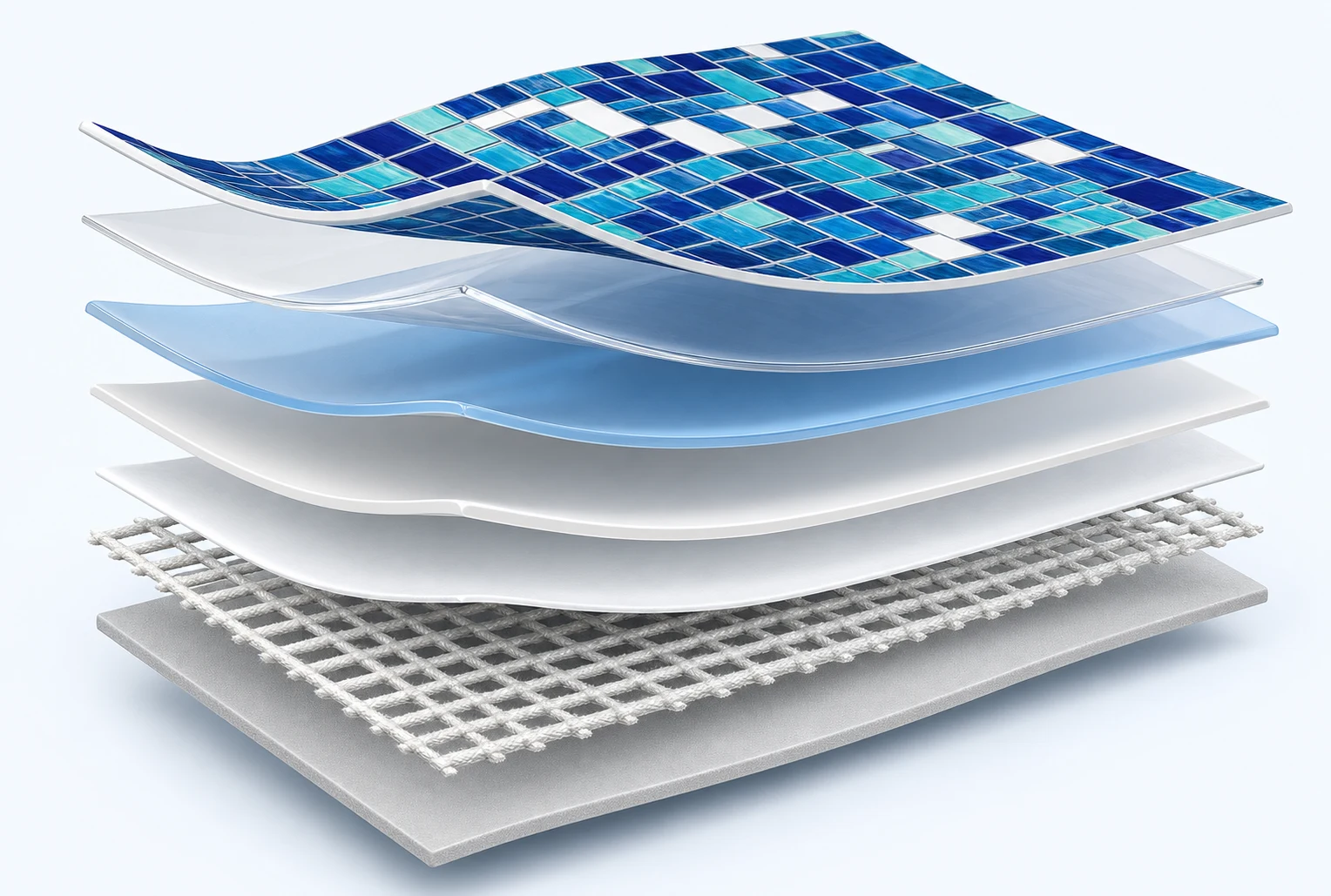
Key takeaway
Convert 0.75, 1.0, and 1.5 mm to mil, then compare PVC pool liner thickness without confusing nominal gauge, construction, or supply format.
Quick answer
0.75 mm, 1.0 mm, and 1.5 mm are nominal thickness values, not a universal good-better-best ranking. Convert the units accurately, then identify the product construction and supply format before comparing quotations.
- 0.75 mm is approximately 29.53 mil.
- 1.0 mm is approximately 39.37 mil.
- 1.5 mm is approximately 59.06 mil.
- 60 mil is exactly 1.524 mm.
Avenqua’s current pool-liner collection presents reinforced 1.5 mm PVC roll membrane. This guide explains how to read common thickness references; it does not state that every thickness discussed is available from Avenqua.
0.75 mm, 1.0 mm, and 1.5 mm to mil
One mil is 0.001 inch. NIST gives the conversion from mil to millimetres as 0.0254, so the values below are mathematical conversions rather than product equivalence claims.
| Nominal value | Converted value |
|---|---|
| 0.75 mm | 29.5276 mil (about 29.53 mil) |
| 1.0 mm | 39.3701 mil (about 39.37 mil) |
| 1.5 mm | 59.0551 mil (about 59.06 mil) |
| 60 mil | 1.524 mm exactly |
Preserve the nominal unit used by the product data sheet, drawing, or specification. A nearby converted number should not silently replace the controlling value.
Why this is not a simple thickness ranking
Pool lining products can differ in reinforcement, layer structure, formulation, surface finish, intended application, and supply format. Thickness is one comparison field, not a complete performance specification.
Manufacturer documentation also uses thickness alongside product construction. For example, RENOLIT’s installer catalogue separately refers to 0.75 mm liners and 1.50 mm reinforced membranes. That is a manufacturer-specific distinction, not a universal rule for every product in the market.
How to read 0.75 mm
Treat 0.75 mm as a nominal thickness reference. Confirm whether the document describes a fabricated liner, sheet, or another product format, and check its construction and installation method. Do not infer that it is interchangeable with a reinforced 1.5 mm roll membrane solely because both are PVC pool-lining products.
How to read 1.0 mm
Treat 1.0 mm in the same way: as one field in a complete product specification. Request the data sheet and verify reinforcement, layer structure, surface treatment, dimensional tolerance, supply format, intended application, and installation requirements. The number alone does not establish equivalence with either 0.75 mm or 1.5 mm products.
How to read 1.5 mm
Official product sheets from RENOLIT and Sika provide examples of 1.5 mm reinforced PVC pool membranes. These examples show why construction belongs beside thickness in a comparison. Their individual tolerances, performance statements, certifications, and other specifications apply only to those named products and must not be transferred to an Avenqua product or another supplier’s material.
For Avenqua’s current 1.5 mm category, use the information and documentation supplied for the selected product rather than substituting a third-party specification.
Reinforced roll membrane and fabricated liner are different supply formats
Before comparing price or thickness, confirm what will be delivered.
- Reinforced roll membrane: supplied in rolls for on-site cutting, fitting, and welding as a lining system.
- Fabricated liner: manufactured to a defined shape or set of dimensions before delivery, with its own fitting method and dimensional requirements.
Use the product name and format stated in the supplier’s documents. Similar informal labels do not make two formats interchangeable.
Nominal thickness, tolerance, and measurement
Nominal thickness is a declared target, while a product-specific tolerance defines the permitted variation and a measurement method defines how compliance is checked. For example, one RENOLIT 1.5 mm technical sheet states a mean-thickness tolerance of ±5%. That figure belongs only to that document and must not be assumed for Avenqua or any other product.
For a controlled comparison, request:
- nominal thickness and controlling unit;
- permitted tolerance;
- referenced test or measurement method;
- reinforcement and layer construction;
- roll or finished-liner dimensions;
- surface finish or documented treatment;
- intended application and installation instructions;
- the current technical data sheet for the offered material.
What else should determine the selection?
The correct specification depends on the project, not thickness alone. Review the substrate and pool geometry, lining format, reinforcement, formulation, surface requirements, installation system, operating conditions, maintenance practices, required documentation, and applicable project or local requirements.
Thicker does not automatically mean more durable in every comparison. Durability is a system outcome involving material construction, formulation, fabrication or welding, installation quality, substrate preparation, operating conditions, and maintenance.
A seven-step comparison workflow
- State the application and pool type.
- Define whether you need roll membrane or a fabricated liner.
- Record the nominal thickness and its controlling unit.
- Request tolerance, construction, reinforcement, dimensions, and finish.
- Compare current technical documents rather than labels alone.
- Confirm installation responsibilities and site conditions.
- Resolve every difference in writing before approving the order.
Copy-ready RFQ wording
Please quote the specified PVC pool-lining format and state the nominal thickness, controlling unit, thickness tolerance, reinforcement and layer construction, surface finish, roll or finished dimensions, intended application, installation requirements, available colours, and current technical documentation. Do not substitute a nearby converted thickness or a different supply format without written approval.
Frequently asked questions
How many mil is 0.75 mm?
0.75 mm is approximately 29.53 mil. A nominal 30 mil value is exactly 0.762 mm, so preserve whichever nominal value controls the product data sheet, drawing, or specification.
How many mil is 1.0 mm?
1.0 mm is approximately 39.37 mil. A nominal 40 mil value is exactly 1.016 mm, so treat the nearby numbers as conversions rather than silently changing the specified thickness.
Is 1.5 mm the same as 60 mil?
No. They are close, but 1.5 mm is approximately 59.06 mil, while 60 mil is exactly 1.524 mm. Keep the nominal value required by the specification.
Is a thicker liner always better?
No universal conclusion can be made from thickness alone. Compare the complete construction, intended use, installation system, documentation, and project requirements.
Can 0.75 mm, 1.0 mm, and 1.5 mm quotations be compared only by price per square metre?
Not reliably. First align the product format, construction, dimensions, tolerance, finish, documentation, delivery scope, and installation responsibilities.
Does this guide mean Avenqua supplies all three thicknesses?
No. Avenqua’s current pool-liner collection presents reinforced 1.5 mm PVC roll membrane. Confirm the available specification for the product under quotation.
Primary technical references
- NIST Guide to the SI, Appendix B.8 — exact mil-to-millimetre conversion factor.
- RENOLIT ALKORPLAN 2026 Professional Catalogue — current manufacturer terminology distinguishing 0.75 mm liners and 1.50 mm reinforced membranes.
- RENOLIT ALKORPLAN XTREME technical data sheet — manufacturer-specific 1.5 mm reinforced membrane example and tolerance.
- Sikaplan WP 3100-15 R product data sheet — current manufacturer-specific 1.5 mm reinforced PVC pool membrane example.
Use each manufacturer’s current document only for the product it names. Project specifications, applicable standards, and supplier documentation remain controlling.