1.5 mm vs 60 Mil PVC Pool Liners: A Buyer’s Thickness Guide
Understand the exact conversion between 1.5 mm and 60 mil PVC pool liner specifications, what thickness confirms, and what buyers should verify separately.
Key takeaway
Understand the exact conversion between 1.5 mm and 60 mil PVC pool liner specifications, what thickness confirms, and what buyers should verify separately.
Quick answer: 1.5 mm and 60 mil are close thickness descriptions, but they are not mathematically identical. The U.S. National Institute of Standards and Technology (NIST) defines 1 mil as exactly 0.0254 mm. That makes 60 mil exactly 1.524 mm, while 1.5 mm is approximately 59.1 mil.
For early product searches, 1.5 mm and nominal 60 mil language can help metric and U.S. customary-unit buyers discuss a similar thickness range. For a quotation, specification, or order, use the supplier’s stated nominal thickness and record any required tolerance instead of silently replacing one value with the other.
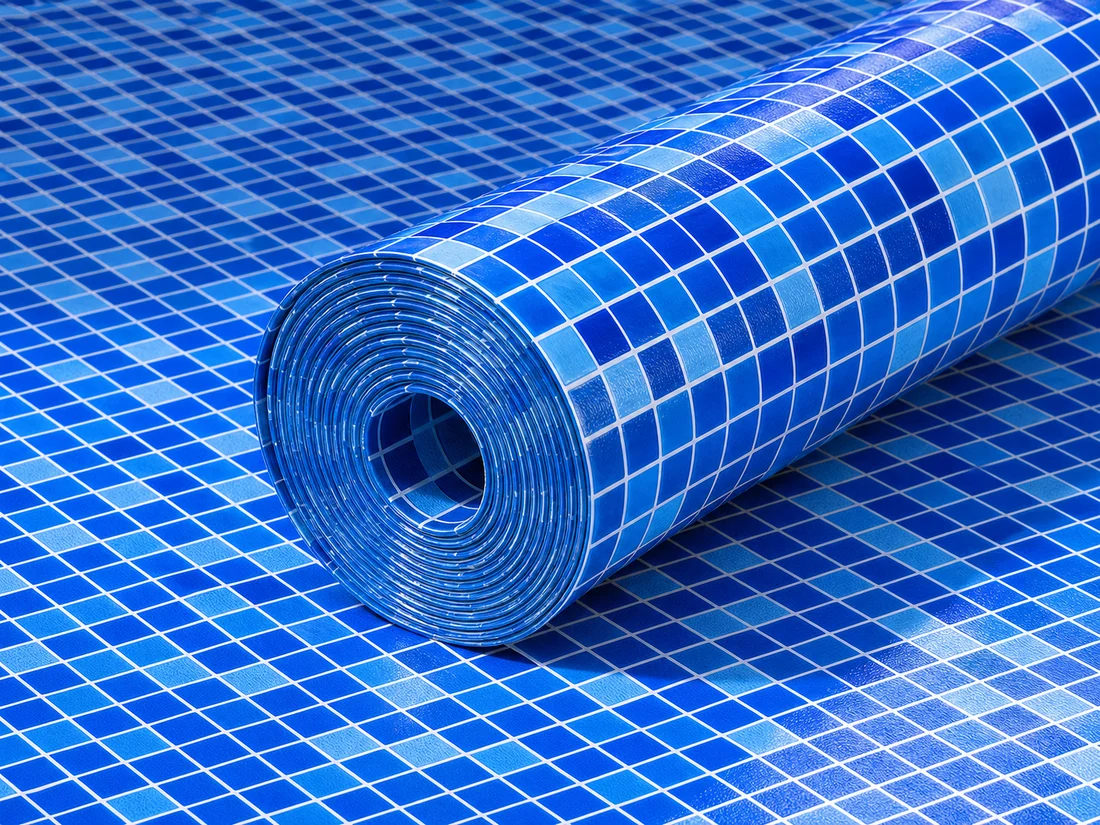
The current Avenqua reinforced PVC pool liner collection lists eight mosaic liner codes at 1.5 mm. This guide explains how that metric value relates to 60 mil searches and which additional details a professional buyer should confirm.
1.5 mm and 60 mil conversion at a glance
| Thickness description | Exact or calculated relationship | Practical reading |
|---|---|---|
| 1 mil | 0.0254 mm exactly | A mil is one-thousandth of an inch |
| 60 mil | 1.524 mm exactly | A U.S. customary thickness specification |
| 1.5 mm | Approximately 59.06 mil | A metric thickness specification close to 60 mil |
The word mil can be confused with millimeter, but they are different units. In thickness measurement, one mil means 0.001 inch. It does not mean one millimeter.
Why buyers encounter both descriptions
Millimeters are common in metric product information, drawings, and international quotations. Mil is traditionally used by some U.S. industry sectors for thickness, as noted by NIST. A buyer may therefore search for a 60 mil PVC pool liner while a supplier’s product sheet identifies a nearby nominal value in millimeters.
Dual-unit wording helps both parties find the correct discussion, but the order should retain the product’s actual stated specification. If a project document requires 60 mil, do not assume that every product described as 1.5 mm automatically satisfies the requirement. Ask whether the specified value is nominal, which tolerance applies, and what documentation is required for acceptance.
What a 1.5 mm thickness statement confirms
A 1.5 mm statement identifies the nominal thickness presented for the material or product. It gives buyers a useful basis for comparing written specifications and checking whether the quotation refers to the intended item.
Thickness should be recorded together with:
- product or catalog code;
- material and construction;
- reinforcement, where applicable;
- roll width and length or finished dimensions;
- color, pattern, and surface requirements;
- intended pool and installation context;
- required tolerance and inspection basis, if specified;
- packing, labels, samples, and documentation.
The current Avenqua mosaic collection lists 1.5 mm material in 1.8 × 25 m rolls, along with project-specific design and sizing support. Buyers should use the relevant product code and written quotation to confirm the final supply basis.
What thickness does not confirm by itself
A thickness number alone does not establish every property of a PVC pool liner or membrane. It does not independently confirm:
- whether the product is reinforced;
- the reinforcement type or position;
- the number or function of material layers;
- surface coating or treatment;
- formulation, weldability, or chemical limits;
- dimensional tolerance;
- suitability for a particular substrate or pool type;
- installation method or accessory compatibility;
- service life, warranty, or regulatory acceptance.
Two products with similar nominal thickness can have different constructions, intended applications, installation requirements, and commercial terms. Compare the complete product specification rather than choosing on gauge alone.
Nominal thickness, tolerance, and inspection
The nominal value is the thickness used to identify or specify the product. A project may also define an acceptable tolerance, sampling plan, test method, or inspection record. Those requirements are not created automatically by writing either 1.5 mm or 60 mil.
If thickness verification is important to acceptance, the buyer should state the requirement before quotation and agree on:
- the nominal unit and value;
- the applicable tolerance;
- the measurement or test method;
- the sampling locations and quantity;
- the document or inspection record required;
- the action to take if a measured result falls outside the agreed range.
Do not invent a tolerance after production or assume that a generic tolerance applies to every construction. Put the agreed basis in the quotation, specification, approved sample record, or order document.
Reinforced membrane and finished-liner questions
Before requesting a quote, clarify whether the enquiry is for roll membrane, a fabricated liner, or another finished project item. The same thickness wording can appear in different supply contexts, while the required dimensions, seams, fittings, accessories, and installation responsibilities may be different.
For reinforced material, ask for the complete construction description rather than treating the word “reinforced” as a thickness category. Reinforcement and nominal gauge are separate specification fields.
For a finished liner, provide pool drawings and dimensions, including depth transitions, steps, corners, fittings, drains, and other details that affect fabrication or installation review. The pool product RFQ checklist provides a structured list of information to include.
Commercial and public-pool projects
Commercial projects should review the complete liner system against the pool structure, operating conditions, installation plan, and local requirements. The CDC Model Aquatic Health Code is model guidance for public aquatic venues rather than a universal law; the current edition should be considered together with the requirements adopted by the authority having jurisdiction.
Thickness is only one part of that review. The project team may also need to confirm the substrate, preparation, fittings, terminations, welding and inspection plan, water-treatment limits, visibility requirements, commissioning, and maintenance documentation. See the commercial pool renovation liner-selection guide and Commercial Pool Solutions for the wider decision process.
Copy-ready thickness enquiry
Buyers can adapt the following wording:
Please quote the identified PVC pool liner or membrane using the supplier’s stated nominal thickness. Our reference requirement is 1.5 mm / approximately 60 mil. Please confirm the quoted nominal value and unit, construction and reinforcement, dimensions, applicable tolerance, available sample, packing, and any requested inspection or technical documents. Do not substitute the thickness basis without noting the change in the quotation.
Add the product code, project application, quantity, destination, drawings, and required schedule before sending the enquiry. If appearance or material verification is needed, request a pool liner sample and match it to the written quotation.
Frequently asked questions
Is 1.5 mm exactly the same as 60 mil?
No. Using the exact NIST conversion, 60 mil is 1.524 mm and 1.5 mm is approximately 59.06 mil. They are close values, but a technical or purchasing document should preserve the stated nominal specification.
Does 60 mil mean the liner is reinforced?
No. Mil describes thickness. Reinforcement is a separate construction characteristic and should be confirmed in the product information or quotation.
Is a thicker PVC pool liner automatically more durable?
Not by thickness alone. Construction, formulation, surface treatment, installation, water conditions, cleaning, operating environment, and maintenance can all affect the completed system. Compare the full specification and intended application.
Should an RFQ use millimeters or mil?
Use the unit stated by the controlling project specification or product information. Including a calculated secondary unit can help communication, but label it as approximate and keep the primary nominal value clear.
What should a buyer request with the thickness?
Request the product code, construction, reinforcement where applicable, dimensions, tolerance if required, intended application, sample status, packing, inspection basis, technical documents, and quotation terms.
Technical references
- NIST Handbook 133, Appendix E: General Tables of Units of Measurement
- CDC: Current edition of the Model Aquatic Health Code
For a project-specific discussion, send the product reference, drawings, quantity, and destination through the Avenqua quotation page.