Choosing Pool Liner Patterns in 2026: Mosaic, Marble, and Stone Looks
A practical design guide to comparing mosaic, marble, and stone-look pool liners without relying on unsupported trend claims.
Key takeaway
A practical design guide to comparing mosaic, marble, and stone-look pool liners without relying on unsupported trend claims.
This article compares three common pool-liner design directions—blue mosaic, marble, and natural stone looks. It is a design guide, not a market-research report or a claim that one pattern is the leading 2026 sales trend.
The best choice depends on the pool, property, lighting, water depth, surrounding materials, and the exact printed sample.
Blue mosaic: familiar and structured
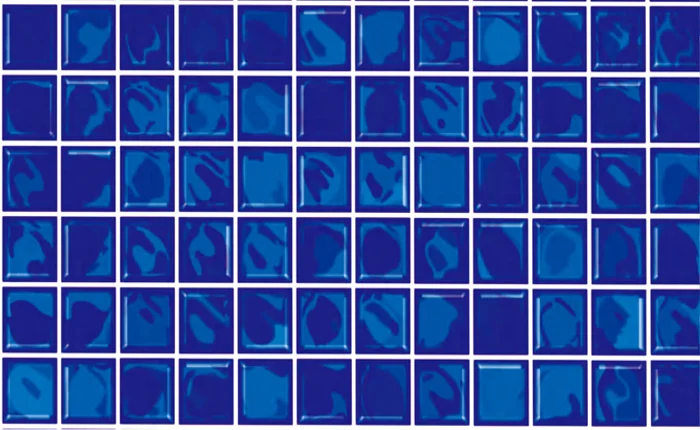
A mosaic print creates a repeated grid or tile effect. Smaller repeats can appear more detailed, while a larger repeat may read more clearly across a large pool. The printed color does not determine the final water color by itself; depth, sky reflection, lighting, and the pool surroundings also contribute.
Blue mosaic can be useful when the design brief calls for a recognizable pool appearance or needs to coordinate with existing blue finishes. Check whether the repeat aligns acceptably at seams, corners, steps, and transitions.
Marble: softer movement
Marble-look prints use veins and tonal variation rather than a regular tile grid. They can create a quieter surface from a distance, but the result depends on the contrast and scale of the print.
Review how the veining will meet at welded seams and change direction across steps or depth transitions. A small sample may not reveal how often the print repeats across the full pool.
Stone look: connection to the landscape
Stone-look patterns can relate visually to paving, garden walls, or natural-color architecture. Avoid selecting by the word “stone” alone: some prints are cool gray, some are warm beige, and others have strong texture or contrast.
Compare the liner beside the actual deck or coping sample. Materials that look coordinated on separate screens may clash when placed together in daylight.
Five checks before approving a pattern
1. View a physical sample
Screens differ in brightness and color. A physical sample provides a better reference for print scale, surface finish, opacity, and color.
2. Test representative lighting
Review the sample in outdoor daylight or the artificial lighting planned for the project. If possible, compare it wet and dry, while recognizing that a small wet sample still cannot reproduce the appearance of a complete filled pool.
3. Consider pool size and depth
A dense pattern may feel balanced in a small pool but visually busy across a large commercial basin. Deeper water can also change the perceived color.
4. Coordinate fixed finishes
Place the liner sample with coping, deck, wall, furniture, and nearby landscape materials. These elements usually remain visible at the same time.
5. Confirm the exact product specification
Pattern choice does not confirm material construction. The quotation should separately state the product code, material, thickness, reinforcement where applicable, surface treatment, dimensions, packing, intended application, and warranty terms.
Public-pool visibility
Public aquatic venues may have rules governing underwater color and visibility. For example, the CDC Model Aquatic Health Code uses white or light-pastel finishes to support visibility of bathers, dirt, algae, cracks, and reference markers. It is model guidance, not a universal law, so check the requirements adopted in the project location before approving a dark or visually complex pattern.
Frequently asked questions
What is the most popular pool liner pattern in 2026?
Avenqua does not currently have a formal sales or market dataset that supports naming one pattern as the overall 2026 leader. Selection should be based on the project rather than an unsupported ranking.
Does a blue liner guarantee bright-blue water?
No. The liner contributes to appearance, but water depth, sky, sunlight, artificial light, surroundings, and maintenance conditions also affect perceived color.
Can a pattern sample predict the complete pool exactly?
No. It improves the decision, but print repetition, seams, pool scale, geometry, water, and lighting change the finished appearance.