5 Tips to Extend the Life of Your Pool Cover
Simple maintenance habits can help pool covers stay cleaner, stronger, and easier to use.
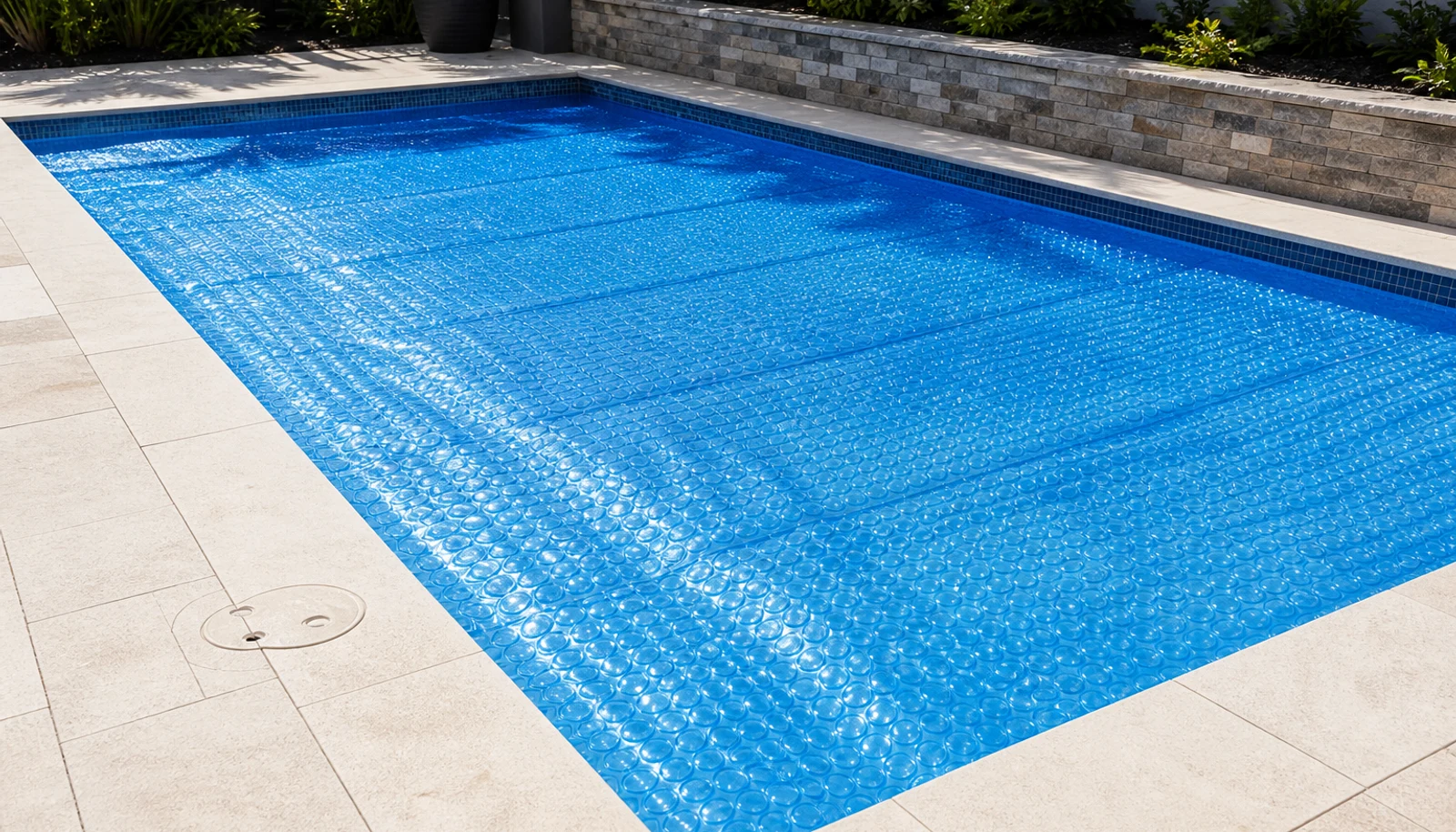
Key takeaway
Simple maintenance habits can help pool covers stay cleaner, stronger, and easier to use.
Solar bubble covers work in a demanding combination of pool chemicals, sunlight, heat, and repeated handling. Their service life varies by material, water conditions, climate, fit, and care, so no universal lifespan should be promised. These five habits address the most common avoidable causes of damage.
1. Keep the water within the cover manufacturer’s limits
Test and maintain pool water according to the pool operator’s requirements and the cover manufacturer’s instructions. Excess disinfectant and unbalanced water can accelerate aging of polyethylene bubble material.
Remove a solar bubble cover before shock treatment or superchlorination unless its manufacturer explicitly says otherwise. Wait until the water has returned to the cover maker’s permitted range before replacing it. Do not adopt a single chlorine number from another brand’s warranty; acceptable limits can vary by product and application.
2. Lift or roll—do not drag
Use a correctly sized roller where practical, especially on a large pool. Pulling a cover over coping, ladders, fittings, or a rough deck can abrade the film and start tears.
When trimming an unhemmed bubble cover, the Plastipack use-and-care guide recommends rounded cuts around ladders rather than sharp internal corners, which can create a weak point. Follow the instructions supplied with the actual cover because orientation and trimming requirements are product-specific. For the conventional bubble material described in that guide, the bubble side faces the water.
3. Rinse dirt away and inspect wear points
Remove leaves and heavy debris before rolling the cover. Rinse with clean water when needed; avoid unapproved solvents, abrasive tools, and cleaners that may attack the film.
During cleaning, check:
- edges and tow points;
- areas beside ladders, corners, and coping;
- bubbles that are collapsing or becoming brittle;
- tears, delamination, or unusual discoloration;
- roller straps and attachment points.
Repair or replace components according to the cover manufacturer’s guidance. A damaged solar cover should never be treated as a safety barrier.
4. Protect a rolled or folded cover from heat and sunlight
A solar cover is cooled by the water while deployed. Off the pool, stacked layers can become much hotter. Plastipack advises using a reflective storage cover and keeping rolled material away from direct sunlight and heat. Its storage guidance also warns that excessive heat can damage polyethylene bubble material while it is rolled.
Use the supplied over-cover whenever the cover is on its roller. If it is folded, place it fully in the shade in a clean area where sharp objects cannot reach it. Follow the manufacturer’s instructions on drying and ventilation before long-term storage.
5. Use it consistently—and remove it completely before swimming
Consistent use matters for water and energy performance. The U.S. Environmental Protection Agency reports that solar and bubble covers can reduce evaporation by approximately 50% to 95% while in use, depending on their shape and coverage.
However, a solar bubble cover is not a safety cover. The U.S. Consumer Product Safety Commission warns swimmers never to enter a pool that is fully or partially covered by a solar cover because of entrapment and drowning risk. Remove the cover completely before anyone enters the water and maintain the barriers and supervision required for the pool.
Frequently asked questions
Should a solar cover stay on during shock chlorination?
Generally no. Remove it unless the specific cover manufacturer permits that treatment, and replace it only after water returns to the permitted range.
Can a solar bubble cover be left uncovered on a roller?
It should be protected as its manufacturer directs. For common polyethylene bubble materials, a reflective roller cover helps limit damaging heat and UV exposure when the cover is off the water.
Is a solar bubble cover a child-safety cover?
No. A floating solar cover should not be represented as a safety cover. ASTM F1346 is the relevant U.S. performance specification for products marketed as swimming-pool safety covers.